
Dressing Table Styling Guide
Published
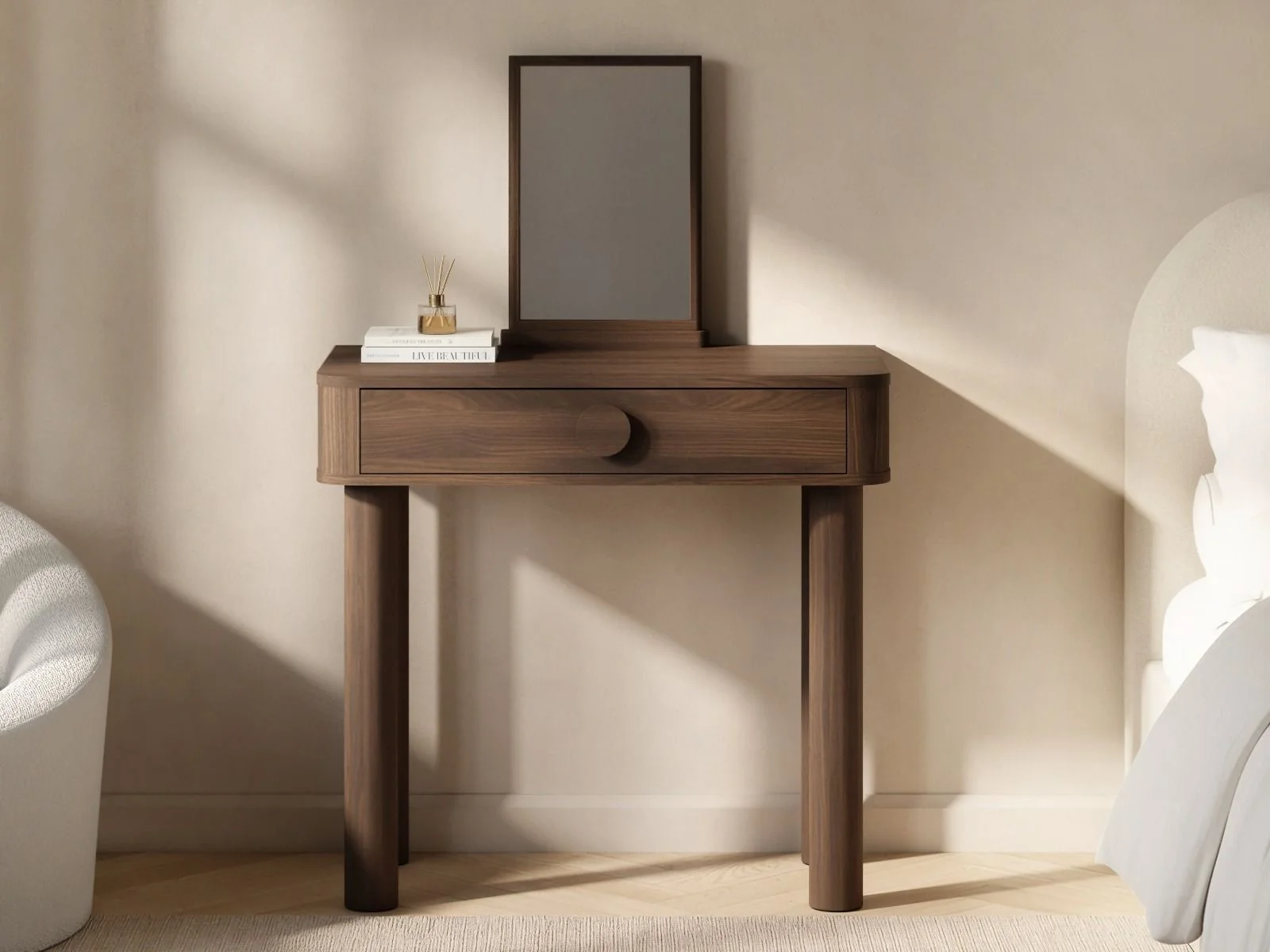
A dressing table should make getting ready easier, not become another surface where clutter gathers. With the right positioning, storage and a few considered accessories, even a small dressing table can become one of the most useful areas of your bedroom.
This dressing table styling guide covers everything from choosing the right table and mirror to organising beauty products, managing smaller spaces and working out exactly how much room you'll need.
Whether you're refreshing your current setup or choosing a new dressing table, the key is balancing what looks good with what genuinely works for your everyday routine.
Dressing Table Styling Guide: Start With the Layout
Before buying organisers or adding decorative accessories, get the position of your dressing table right.
Ideally, your dressing table should sit somewhere with good natural light without blocking a doorway, wardrobe or main walkway. Bed Kingdom recommends positioning a dressing table near a window where possible, while avoiding an angle that creates unwanted glare in the mirror.
Think about your daily routine too. Keeping your dressing table reasonably close to your wardrobe can make getting ready feel much more straightforward.
If you're starting from scratch, explore our range of dressing tables to compare compact, storage-led and mirror-equipped designs.
How to Style a Dressing Table Mirror Area
The mirror usually becomes the focal point of a dressing table, so it's worth giving this area a little more thought than simply placing the largest mirror you can find on top.
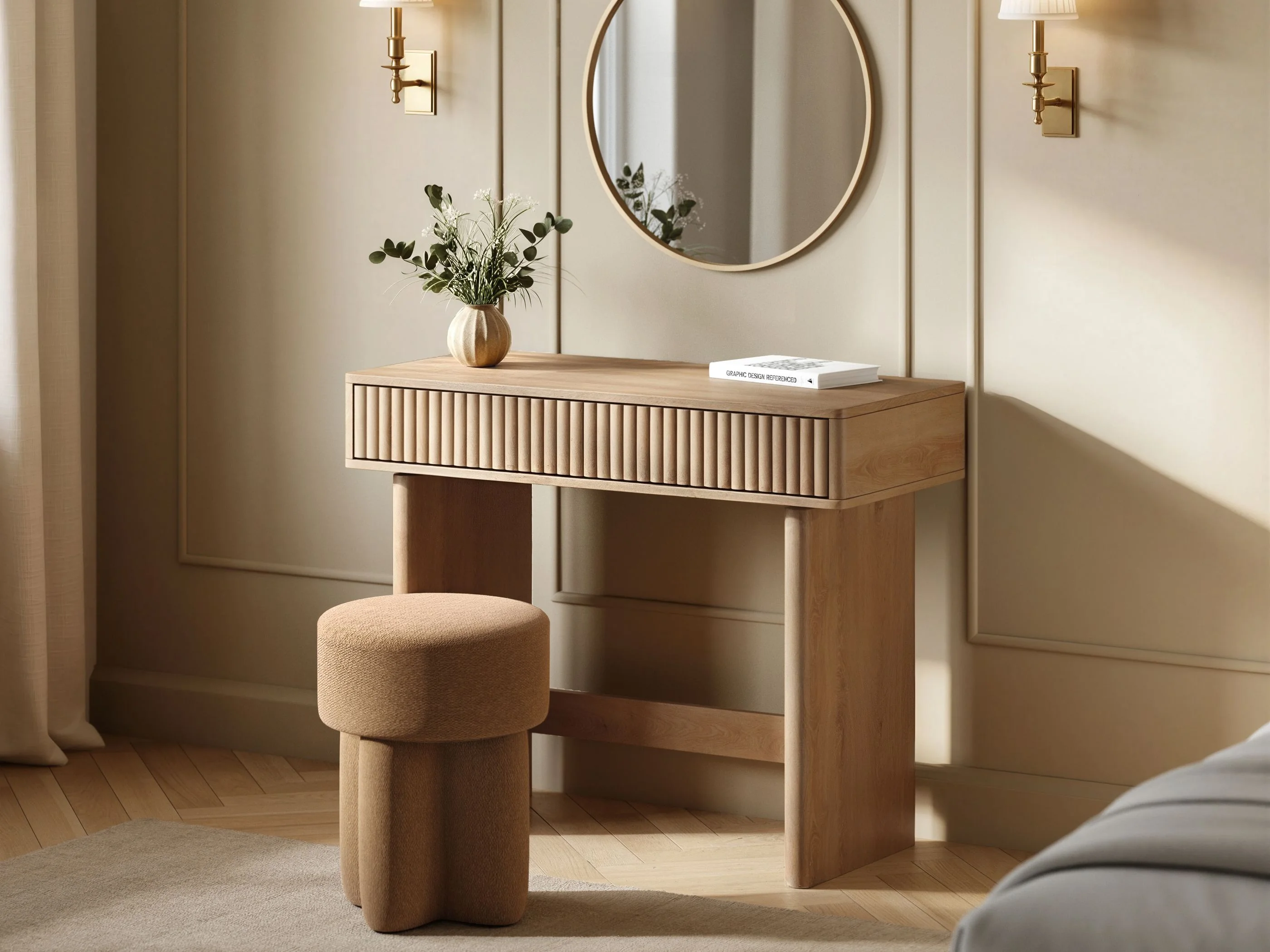
Choose a Mirror That Suits the Table
Start with proportion.
A large mirror can make a small dressing table feel top-heavy, while a very small mirror may look lost above a wide table.
For a balanced appearance, choose a mirror that's narrower than the dressing table and position it roughly around the centre of the surface.
Different shapes create different looks:
- Round mirrors: soften straight-edged furniture and suit contemporary bedrooms
- Rectangular mirrors: create a clean, structured appearance
- Arched mirrors: add a softer statement without feeling overly decorative
- Three-panel mirrors: useful when you want different viewing angles
- Illuminated mirrors: combine lighting and a mirror within one space-saving feature
Wall-mounting your mirror can also free up valuable tabletop space, particularly on a compact dressing table.
You can also browse bedroom mirrors if you want to coordinate the mirror with the rest of your bedroom furniture.
Get the Lighting Right
Natural daylight is particularly useful for applying make-up, so a dressing table near a window can work well.
If the room is darker, use lighting around or beside the mirror rather than relying entirely on an overhead ceiling light. Light coming only from above can create shadows across your face.
For a practical setup, position light on either side of the mirror where possible. An illuminated vanity mirror can be particularly useful where tabletop space is limited.
Dressing Table Organisation Hacks That Actually Work
A beautiful dressing table won't stay beautiful for long if there's nowhere sensible to put anything.
The best dressing table organisation system is usually the simplest one: keep things close to where you actually use them.
2. Organise Drawers by Category
Avoid creating one drawer containing a little bit of everything.
Instead, give each area a purpose, such as:
- Make-up
- Skincare
- Hair products
- Jewellery
- Hair accessories
Small drawer dividers can stop lipsticks, brushes and jewellery from becoming one large tangle.
4. Store Products Upright
Vertical organisers are particularly useful for lipsticks, brushes and smaller bottles.
You can see what you've got without digging through a drawer, which also helps prevent buying another product because you'd forgotten the first one was there.
5. Give Hair Tools Their Own Home
Hairdryers, straighteners and curling tools quickly create clutter because of their cables.
Keep them together in a deeper drawer or suitable storage compartment where possible, rather than leaving them permanently across the tabletop.
What Size Dressing Table Do I Actually Need?
The right size isn't necessarily the largest dressing table that fits against the wall.
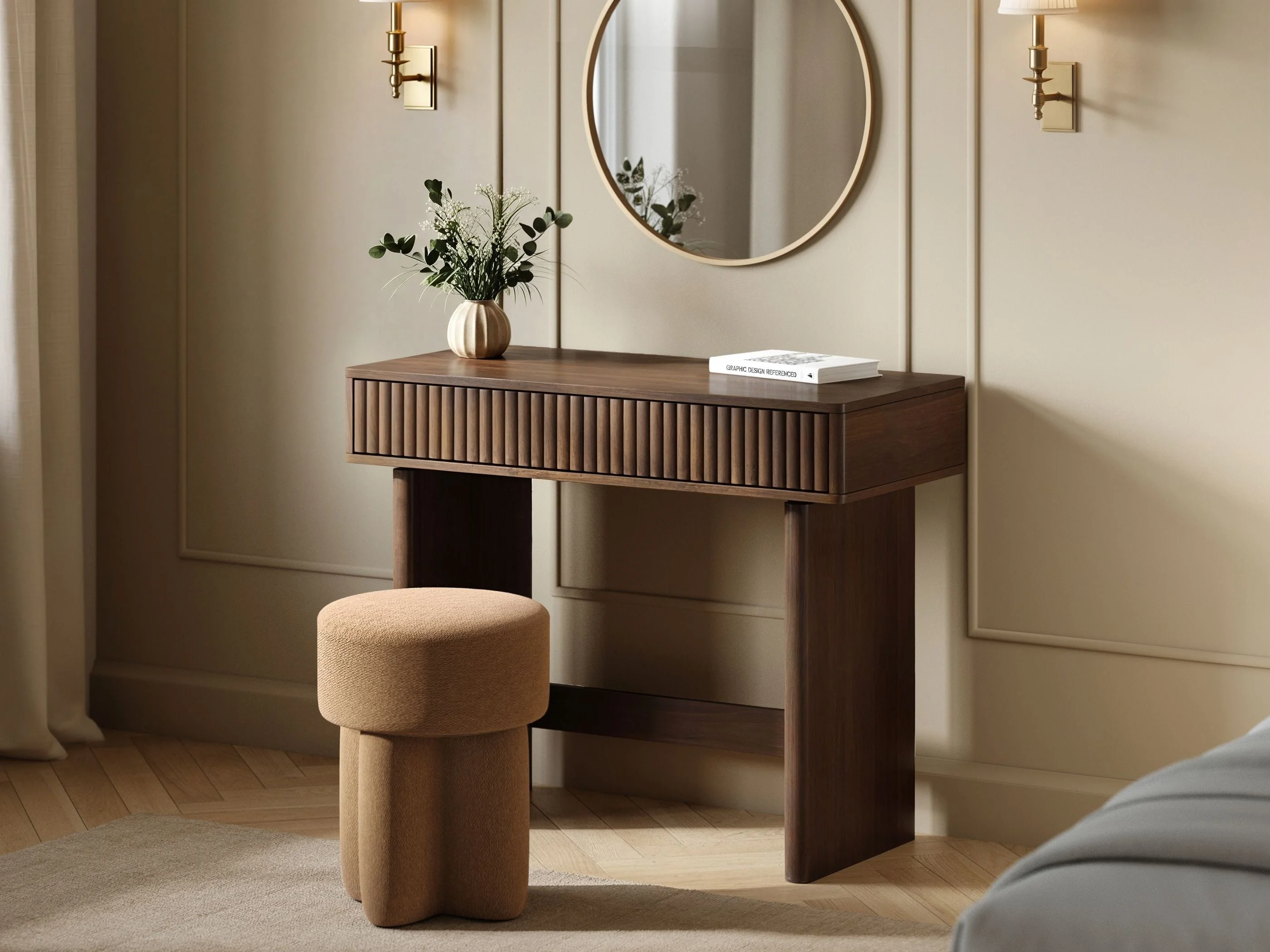
You also need enough room to sit down, pull the stool out and walk around it comfortably.
Typical dressing tables are often around 100–120cm wide and 40–50cm deep, although compact models can be considerably narrower. Heights commonly sit somewhere around 75–80cm. Always check the actual product dimensions rather than relying on standard measurements.
| Bedroom/setup | Approx. dressing table width | Best for |
|---|---|---|
| Very compact | 60–80cm | Box rooms, alcoves and occasional use |
| Small | 80–100cm | Everyday essentials with limited storage |
| Standard | 100–120cm | Most regular beauty and grooming routines |
| Large | 120cm+ | More storage, larger mirrors and spacious bedrooms |
Measure the Available Wall
Measure the width of the wall from skirting board to skirting board, then note anything that reduces usable space.
That includes:
- Radiators
- Plug sockets
- Doors
- Wardrobe doors
- Windows
- Built-in furniture
Don't choose a table that's exactly the same width as the gap. Leaving some breathing room usually makes the furniture look better and gives you easier access around it.
Check the Depth Too
Width gets most of the attention, but depth can cause more problems in a small bedroom.
A 45cm-deep dressing table may sound compact until there's also a stool and someone sitting in front of it.
Aim to leave roughly 60–75cm of usable space in front of the table where your room allows, giving you somewhere to pull the seat out and move around comfortably.
Best Dressing Tables for Small Bedrooms
Limited floor space doesn't mean giving up your dressing area.
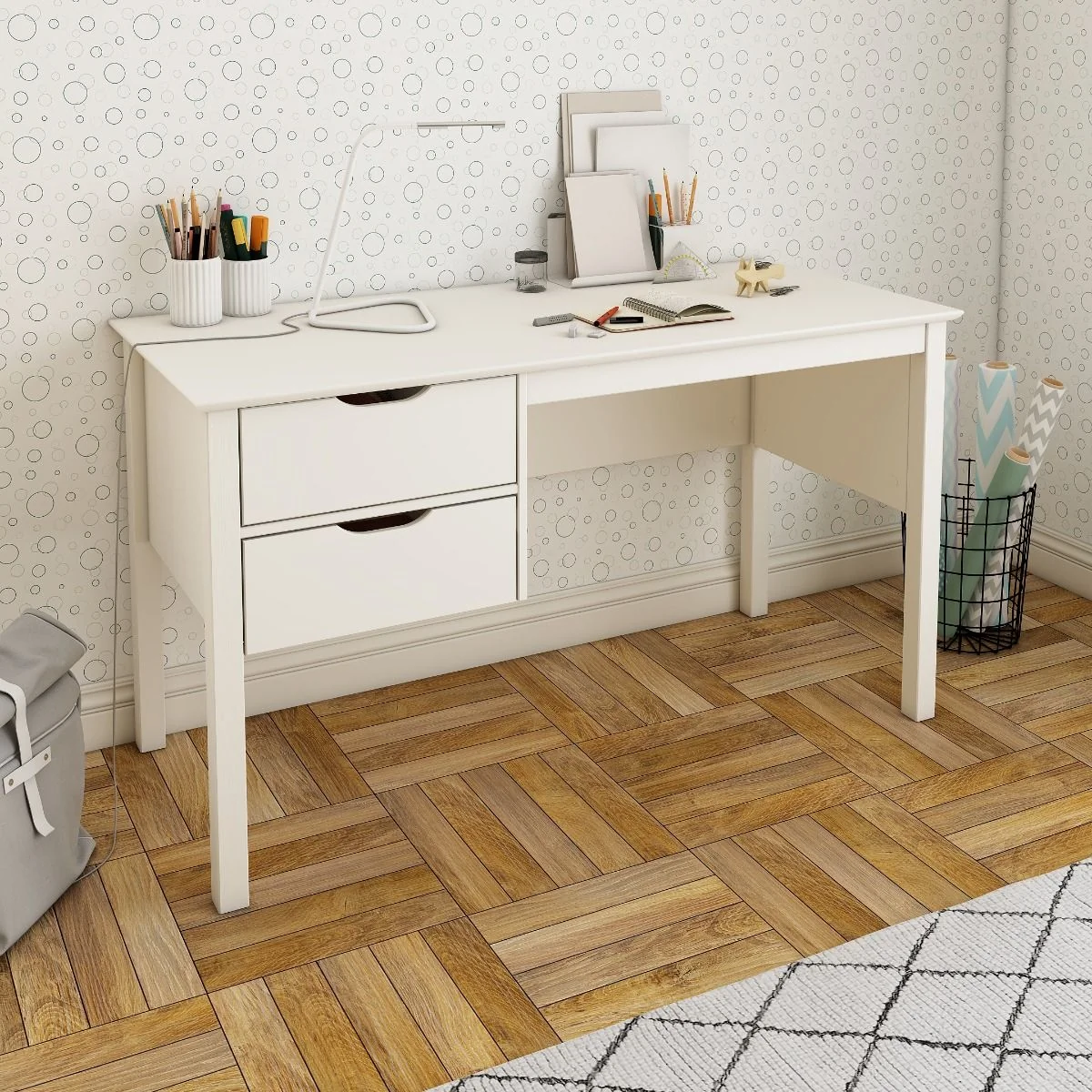
Look for furniture that works harder.
Choose Built-In Storage
Drawers let you keep the top clear without needing another piece of bedroom furniture just for beauty products.
If storage is your priority, compare the number and depth of drawers rather than simply choosing the smallest table available.
Consider a Corner Dressing Table
An unused corner can sometimes accommodate a dressing table without competing with the bed or wardrobe for the main wall space.
Corner dressing tables can be particularly useful in awkward layouts where a traditional rectangular table interrupts the walkway.
Look for Dual-Purpose Designs
Some dressing tables can double as a desk when you're not getting ready.
A wall-mounted or fold-away mirror makes this particularly easy because you'll have more uninterrupted working space.
Bed Kingdom's current dressing table range includes compact desks, drawer-based vanities, corner designs and models with integrated mirrors, giving you options for different bedroom layouts.
How to Match a Dressing Table to Your Bedroom
Your dressing table doesn't have to match every other piece of bedroom furniture perfectly.
In fact, slightly mixed furniture can make a room feel more considered.
Instead, pick one or two elements to repeat.
Common Dressing Table Styling Mistakes
A few small changes can make the whole area more useful.
Choosing Style Before Size
That beautiful oversized vanity won't feel quite so beautiful when you have to squeeze sideways past it every morning.
Measure first. Shop second.
Ignoring the Chair
Your stool or chair is part of the setup, not an afterthought.
Check that it's comfortable at the table height and can tuck underneath if space is tight.
Forgetting Plug Sockets
If you regularly use a hairdryer or styling tools, check socket placement before deciding where the table will live.
An otherwise perfect corner becomes much less convenient when every morning involves an extension lead across the bedroom.
Quick Tips for Styling Your Dressing Table
- Start practical: Position the table and mirror before decorating.
- Keep the surface edited: Display daily essentials, store everything else.
- Use trays: They make small products feel instantly more organised.
- Add one personal detail: A photograph, vase or favourite perfume is enough.
- Think vertically: Wall-mounted mirrors preserve surface space.
- Use drawers properly: Dividers stop smaller items from disappearing.
- Check lighting: Good lighting matters more than decorative accessories.
- Measure the full footprint: Include your stool and the space needed to use it.
Create a Dressing Space That Works for You
The best dressing table isn't simply the one that photographs well. It's the one that makes your morning routine easier.
Start with the available space, choose storage around what you actually own, position the mirror carefully and resist the temptation to cover every centimetre with accessories.
Whether you're fitting out a compact bedroom or creating a larger dedicated getting-ready area, explore Bed Kingdom's collection of dressing tables to find a size and style that works naturally with your room.